Building a Lean AI-Powered Team
How do entrepreneurs build a lean, AI-powered team in 2026? Lean AI teams pair a small core of generalist humans (3-7 people) with a stack of specialized AI agents that handle research, content, support, and operations. The result: a 5-person company can produce the output of a 25-person company at one-fifth the cost.
Key Takeaways
- The optimal 2026 startup is a hybrid of humans + AI agents, not a pure-human or pure-AI org.
- Hire generalists who can direct AI, not specialists who compete with it.
- Use contractors and agencies for non-core work — equity is precious.
- Build clear “human-only” decision boundaries (legal, hiring, brand voice).
- Invest in onboarding documentation — it doubles as agent prompts.
The Lean AI Org Chart
| Role | Human or AI | Why |
|---|---|---|
| Founder / CEO | Human | Vision, decisions, relationships |
| Operator / COO | Human | Process, hiring, accountability |
| Engineer or product builder | Human | Architecture and judgment |
| Research and data analysis | AI agent | Speed and scale |
| Content drafts and SEO | AI agent + human editor | Volume + quality control |
| Customer support tier 1 | AI agent | 24/7 response times |
| Customer support tier 2 | Human | Empathy and edge cases |
| Bookkeeping | AI tool + accountant | Accuracy with oversight |
Hiring for the AI Era
Hire Generalists Who Direct AI
The most valuable 2026 employees are “AI conductors” — people who can scope a task, brief an AI agent, evaluate the output, and iterate. They replace three specialist roles each.
Pay for Output, Not Hours
With AI multiplying productivity, time-based billing breaks down. Move to retainers or output milestones.
Use Fractional Talent
A fractional CMO, CFO, or CTO at 10 hours per week often beats a junior full-timer at 40.
Common Mistakes to Avoid
- Hiring before defining the role. Document the workflow first; then decide if it needs a human.
- Replacing humans with AI for customer-facing trust work. Onboarding calls and refund decisions still need a person.
- No human review on AI output that touches customers. Hallucinations in support cost trust quickly.
- Skipping documentation. Undocumented processes can’t be handed to AI later.
Action Steps
- List every recurring task in your business.
- Tag each task: human-only, AI-only, or hybrid.
- Document the top 5 hybrid tasks as runbooks.
- Identify one specialist role you can avoid hiring this quarter by deploying AI.
- Set a “human review required” rule for any AI output going to customers.
FAQ
How small can a profitable AI-powered company be?
Solo founders are now reaching $1M ARR in some niches. Three to five people is a common 2026 sweet spot for $5M-$10M ARR.
Should I hire a developer or use no-code + AI?
For an MVP, no-code + AI usually wins on speed. Hire a developer once you have product-market fit and need custom workflows.
What roles still require humans?
Sales of high-ticket products, executive hiring, brand strategy, legal decisions, and any role that requires accountability for outcomes.
How do I prevent burnout on a small team?
Use AI to absorb repetitive work, schedule a true day off per week, and rotate people through the most draining tasks.
Should I give equity to early hires?
Yes — at the right stage. Use 4-year vesting with a 1-year cliff, and reserve 10-15% for the early team.
Sources & Further Reading
- Stripe Atlas Founder Reports 2025 — staffing patterns of high-growth startups.
- a16z research on AI-native company structures.
- Riman, T. (2026). 500 Ways AI Marketing — agent deployment patterns.
About Riman Agency: We help founders design lean AI-powered organizations. Book a strategy call.
← Previous: Founder Brand | Series Index | Next: Operations and Automation →
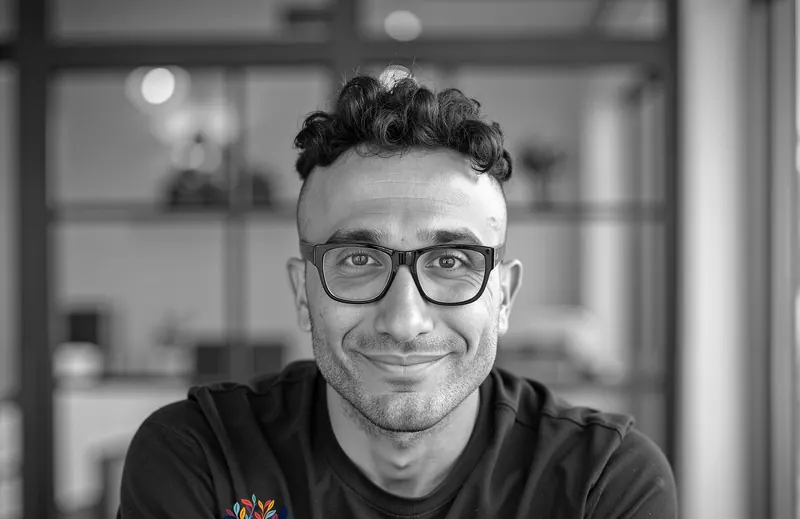
مؤسس Riman Agency، ومؤلف ثمانية كتب في SEO وAEO والتحليلات والتسويق بالذكاء الاصطناعي وريادة الأعمال، ومقدّم ورش عمل بالإنجليزية والفرنسية والعربية. عن Tarek